

As more and more people embark on the cryptocurrency investment journey, they wonder: how do I decide what cryptocurrency to invest in? By carefully defining our investment goals and assessing our risk tolerance, we can pave the way for a balanced and informed investment approach. In this guide, we will try to demonstrate how the investment goals can be set and help identify the right cryptocurrency in our case with specific risk tolerance and period. Success lies in deliberate planning and a well-defined strategy.
Step 1: Define Your Investment Goals
In the first part of our guide, we will lay the foundation for successful cryptocurrency investment by defining investment goals, assessing risk tolerance, and considering time horizons. This initial step is crucial in establishing a tailored investment strategy that prioritizes balanced growth and minimizes exposure to extreme volatility.
- Risk Tolerance: Assess how much risk you are willing to take. Cryptocurrencies are known for their volatility, so understanding your risk tolerance is crucial.
- Time Horizon: Determine whether you’re looking for a short-term gain or long-term investment.
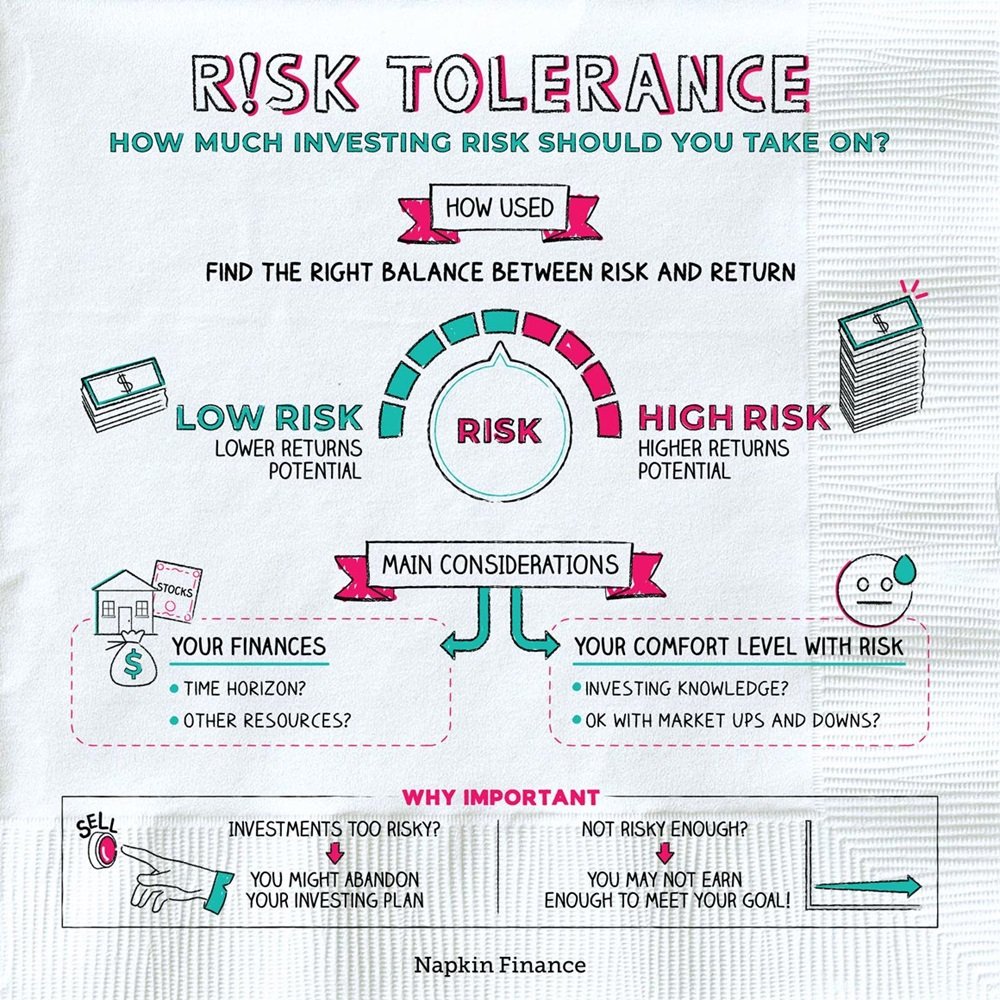
Here’s how we define ours:
- Risk Tolerance: Moderate
- Investment Goals: Balanced growth with a medium to long-term horizon, focusing on cryptocurrencies with a good track record, solid fundamentals, and potential for steady appreciation.
Given our moderate risk tolerance, the investment strategy should focus on a balance between well-established cryptocurrencies and select altcoins with solid growth potential. The goal is to achieve consistent returns over a medium to long-term period, minimizing exposure to extreme volatility.
Step 2: Research the Market
There are three main things to take into consideration:
Market Trends: Keep an eye on overall market trends. Bullish (upward) or bearish (downward) trends can impact all cryptocurrencies.
Market Capitalization: Look at the market cap of the cryptocurrency. Larger market caps usually indicate more established projects but may offer lower growth potential.
Liquidity: Ensure the cryptocurrency has sufficient liquidity, meaning you can easily buy or sell without affecting the price too much.
It’s reasonable to start by observing the overall cryptocurrency market sentiment. For instance, during a bullish market, major coins like Bitcoin (BTC), Ethereum (ETH), or Solana (SOL) typically experience strong growth, positively impacting the broader market, including altcoins.
Focusing on cryptocurrencies with large or mid-sized market capitalizations will provide a balance between stability and growth potential. For example:
- Bitcoin (BTC): As the largest cryptocurrency by market cap, BTC is often considered a “digital gold” and is less volatile than many altcoins.
- Ethereum (ETH): ETH is the second-largest cryptocurrency, with a strong ecosystem of decentralized applications (dApps) and smart contracts, making it a staple in any diversified portfolio.
- Other top 10 coins rank by market cap
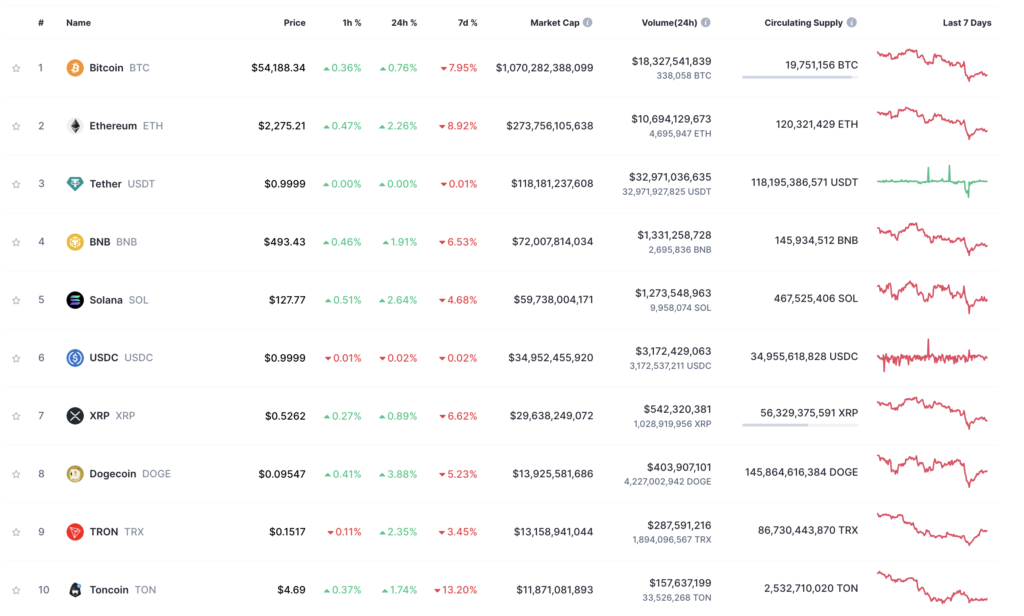
Here we should also consider the location situation. As we’re acting within the Australian market, and liquidity is crucial to enter and exit positions without significant price impact, we should choose cryptos accordingly. Apart from BTC, both ETH and SOL have high liquidity globally and on Australian exchanges like Swyftx or CoinSpot.
So, let’s proceed with the next step, shortlisting Bitcoin, Ethereum, and Solana as potential cryptocurrencies to invest in.
Step 3: Analyze the Project
Analyzing the project is crucial to understand where the money will go. The for following points are a must to check before investing in any crypto.
- Whitepaper: Review the project’s whitepaper. It should clearly outline the problem the project aims to solve, the technology behind it, and the team’s strategy.
- Team & Developers: Check the team’s background. Projects with experienced and reputable developers are more likely to succeed.
- Community & Ecosystem: A strong, active community can be a positive indicator. A large ecosystem with various applications (DeFi, NFTs, etc.) also adds value.
- Use Case: The cryptocurrency should have a clear and compelling use case. This might be a unique technology, a new type of financial service, or a strong network effect.
An example of project analysis
| Ethereum (ETH) | Solana (SOL) | |
| Whitepaper | Ethereum’s whitepaper introduced the concept of smart contracts and decentralized applications, aiming to decentralize the Internet. | Solana’s whitepaper introduced a high-performance blockchain platform designed to handle a large number of transactions per second, addressing the scalability limitations of other blockchains. |
| Team | Ethereum was co-founded by Vitalik Buterin, who is still actively involved in its development, giving the project strong leadership. | Solana’s team is led by Anatoly Yakovenko, a former Qualcomm engineer. The team’s technical expertise has contributed to the platform’s impressive performance. |
| Community & Ecosystem | Ethereum has a vast ecosystem of developers and projects, including DeFi (Decentralized Finance) and NFTs (Non-Fungible Tokens). | Solana has a growing community and ecosystem, with a focus on DeFi and NFTs. The platform has attracted numerous projects and developers due to its scalability and low transaction fees. |
| Use Case | ETH’s use case in powering dApps and smart contracts provides growth potential beyond its function as a currency. | SOL’s primary use case is as a native currency for the Solana blockchain. However, its scalability and low transaction fees make it attractive for various applications, including DeFi, gaming, and supply chain management. |

Step 4: Examine Tokenomics
Here are two main metrics to look for: supply and staking/yield. Check the total supply and circulating supply. A low circulating supply relative to the total supply could lead to inflationary pressure when more tokens are released. Additionally, some cryptocurrencies offer staking or yield farming opportunities, which can provide additional returns.
An example of tokenomics analysis:
Ethereum (ETH)
- Supply: Ethereum has an uncapped supply, but the recent Ethereum 2.0 upgrade introduces deflationary mechanisms through burning fees, which could positively impact its value.
- Staking/Yield: Ethereum 2.0 offers staking rewards, allowing you to earn passive income while holding ETH, which suits a moderate risk profile.
Solana (SOL)
- Supply: Solana has a total maximum supply of 489 million SOL. This fixed supply can create a deflationary effect as demand for SOL increases, potentially driving up its price.
- Staking/Yield: Solana offers staking rewards, allowing you to earn passive income by contributing to the network’s security. Staking SOL can be done on various Solana-compatible wallets and exchanges.
Step 5: Check Regulations and Security
Understanding the regulatory landscape for the cryptocurrency is a must in 2024. Regulatory crackdowns can negatively impact prices. The same goes for the project’s security track record. It’s sensible to avoid projects that have been hacked or have poor security practices.
Regulatory Environment in Australia
Australia has a relatively crypto-friendly regulatory environment. The Australian Securities and Investments Commission (ASIC) oversees cryptocurrency exchanges, ensuring they comply with anti-money laundering (AML) and counter-terrorism financing (CTF) laws. This regulatory clarity reduces the risk of sudden legal challenges affecting your investments.
Security
Both Bitcoin and Ethereum have strong security records, with well-established networks resistant to attacks. Solana with its proof-of-stake consensus mechanism providing resistance to attacks is highly secure as well. The next is to ensure using secure cryptocurrency exchanges and consider using hardware wallets for additional security.
Step 6: Monitor Social Media and News
Following news related to cryptocurrency and its development requires daily dedication. Announcements of partnerships, upgrades, or major adoptions can be positive indicators. While some negative comments from influencers or network exploits are likely to lead to losses.
Usually checking platforms like Twitter, Reddit, and eventually joining some Telegram crypto channels to identify the community sentiment is enough. However, beware of hype and FOMO (fear of missing out).
In our case of moderate-risk crypto investment, it’s better to stay updated on major developments like Bitcoin’s adoption by institutions or Ethereum’s network upgrades (e.g., the transition to Ethereum 2.0). These events can significantly impact the prices of Solana as well, not to mention the project updates. Lastly, following Twitter news accounts can provide timely insights from credible sources.

Step 7: Use Analytical Tools
In general, technical analysis is a powerful tool to identify potential entry and exit points. Everyone can learn reading charts and use indicators like RSI (Relative Strength Index) and MACD (Moving Average Convergence Divergence). However, they are more suitable for traders.
Tools like Glassnode or Santiment can give insights into on-chain activity, such as active addresses, transaction volumes, and whale movements.
For long-term horizon, utilizing tools like TradingView to analyze cryptocurrency price charts is possible, if the portfolio is reviewed frequently.
Step 8: Diversify Your Portfolio
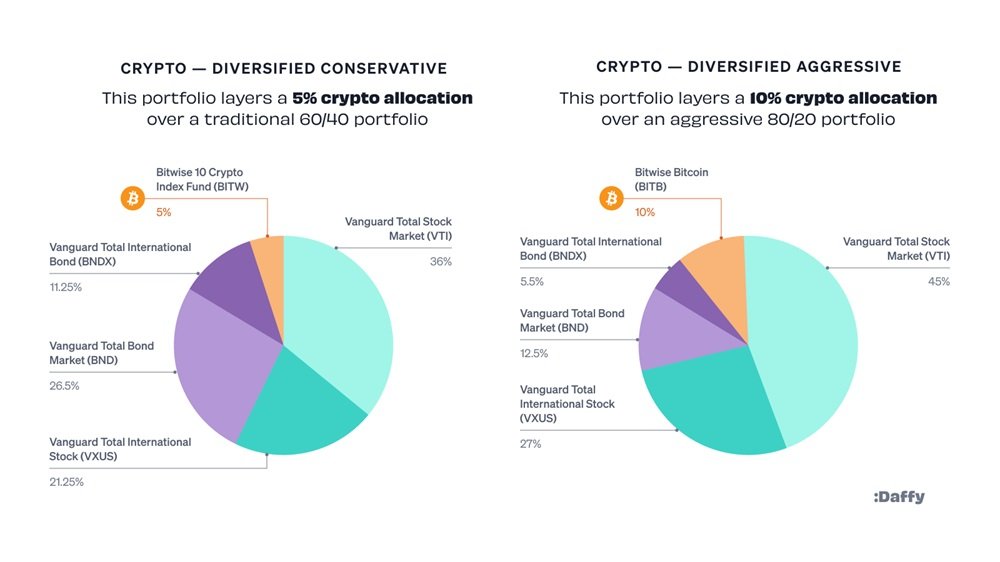
To manage risk, everyone should diversify their investments. Don’t put all your money into one cryptocurrency. We will also try to diversify across different types of cryptocurrencies beyond Bitcoin and Ethereum, allocating a portion of our portfolio to other promising cryptocurrencies with solid fundamentals and lower volatility, such as Cardano (ADA), known for its strong focus on scalability and security.
Step 9: Start Small
Any newcomer to the cryptocurrency investment should consider starting with a small amount to test the waters before committing more capital. In this case, dollar-cost averaging is the most optimal strategy. This strategy involves investing a fixed amount at regular intervals, which can reduce the impact of volatility.
Given our moderate risk tolerance, we will allocate 50% to Bitcoin, 20% to Ethereum, 20% to Solana, and the remaining 10% to Cardano.
Step 10: Stay Updated
The crypto market evolves rapidly, so we should all stay informed about new technologies, regulations, and market dynamics. For any crypto investment, it’s crucial to have an exit strategy in place. However, we admit it’s not easy to decide in advance when to sell or whether it should be based on price targets, time, or changes in the market.